
CHOOSING A MONTESSORI SCHOOL: WHAT PARENTS SHOULD REALLY LOOK FOR
By The Pine Nest Team, . 3 min read
CHOOSING A MONTESSORI SCHOOL: WHAT PARENTS SHOULD REALLY LOOK FOR
“We have visited dozens of classrooms and worked with countless parents, and what I see most often is that small details reveal the true Montessori approach sometimes more than labels or certifications.”
Montessori is more than a name on a brochure. As a parent, deciding where to send your child can feel like walking into a maze of philosophies, materials, and promises. Having worked with families and schools for years, I have learned what truly matters when evaluating a program and what you can safely overlook.
1. Observe the Classroom, Not Just the Logo
Many schools proudly display Montessori logos or certifications. While credentials are important, the classroom itself tells the real story.
- Are children working independently and concentrating for long periods?
- Are mixed-age groupings present and functional?
- Do adults guide rather than dictate?
During consultations, I often tell parents: spend more time observing than asking about philosophy. The reality of the classroom is far more revealing than any brochure.
2. Look for a Prepared Environment
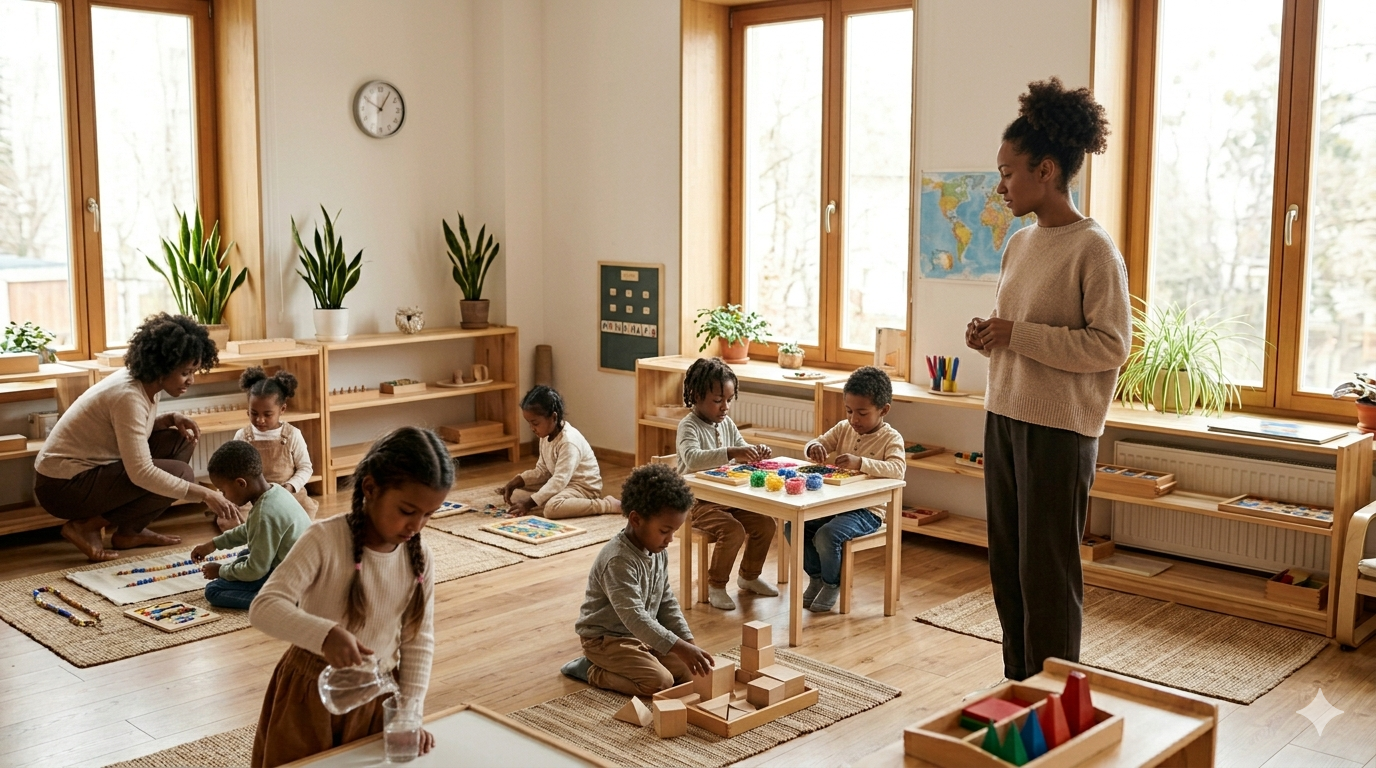
Authentic Montessori classrooms are intentionally designed to support independence.
- Materials are accessible and purposeful.
- Shelves are low, organised, and uncluttered.
- Children can move freely without unnecessary interruptions.
In schools I have trained, even small changes in environment, like consistent organization and accessible materials, can drastically improve engagement and behaviour.
3. Notice How Teachers Interact
Montessori teachers are guides, not traditional instructors. Look for:
- Observation before intervention
- Offering lessons at the right developmental moment
- Encouraging problem-solving and self-direction
If adults are constantly hovering, directing, or controlling every step, it may not be authentic Montessori, or at least not fully implemented.
4. Ask About Philosophy, But Watch Practice
Many parents rely on conversations or school literature alone. Instead:
- Listen for depth, not just buzzwords
- Ask how the school handles conflicts, challenges, or behaviour
- Notice whether the answers align with what you observed in the classroom
I have guided parents who were initially dazzled by “Montessori language” only to discover gaps in implementation. Seeing the classroom first prevents disappointment.
5. Consider Developmental Fit
Montessori is not one-size-fits-all. A school can be excellent but still not fit your child’s temperament, interests, or developmental stage.
- Ask about class size and mixed-age groupings
- Consider how children are supported socially and emotionally
- Look at the balance between independence and guidance
During our consulting work, we often remind parents: the “best” school is the one that fits your child, not necessarily the one with the most polished image or longest history.
Choosing a Montessori school is not about finding perfection; it is about finding authenticity, alignment, and care. Observe, ask questions, and trust your instincts.
Even small details, such as how a child carries a tray, how a teacher responds to frustration, can reveal whether the school truly honours Montessori principles.
If you are unsure about how to evaluate classrooms or want a professional perspective, we help parents and school leaders see Montessori in action. Sometimes a fresh set of eyes makes all the difference, and I am happy to offer guidance and practical insights, no pressure, just support.