
MONTESSORI VS TRADITIONAL EDUCATION: WHAT THE RESEARCH AND CLASSROOMS SHOW
By The Pine Nest Team, . 3 min read
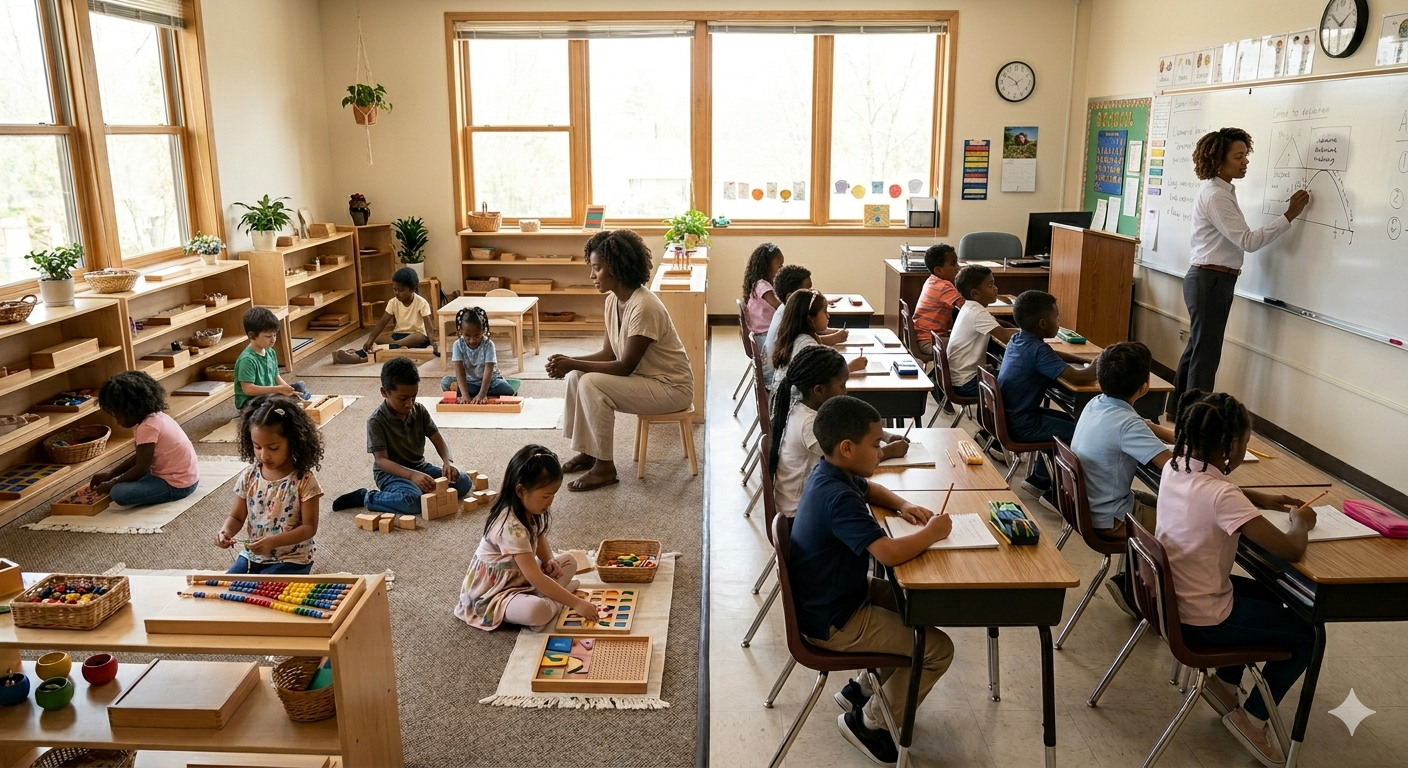
MONTESSORI VS TRADITIONAL EDUCATION: WHAT THE RESEARCH AND CLASSROOMS SHOW
“We have spent years visiting classrooms, and the difference is striking. In Montessori, children are active participants in their learning. In traditional settings, they often wait for instruction. Both have value, but understanding the differences helps schools and families make informed choices.”
Key Differences in Philosophy
Traditional Education
- Teacher-led instruction
- Standardised pacing
- Motivation often comes from grades, rewards, or external expectations
Montessori Education
- Child-centred learning
- Individualised pacing based on development
- Motivation is intrinsic, rooted in curiosity and engagement
In our consulting experience, schools that embrace Montessori philosophy see children who are more confident in their problem-solving and independent thinking.
Classroom Structure Compared
Traditional Montessori
Fixed schedules and lesson times Long, uninterrupted work periods
Whole-group instruction Individual or small-group work
Limited movement Movement is purposeful and integrated
Same-age classrooms Mixed-age classrooms
Montessori classrooms often feel calmer, even with children moving around. I have observed children deeply engaged in activities that match their developmental needs a contrast to the rigid pacing of many traditional classrooms.
The Role of the Teacher
In traditional education, the teacher is the primary source of knowledge, delivering lessons and monitoring compliance.
In Montessori classrooms, the adult acts as a guide:
- Observing children carefully
- Introducing lessons when the child is ready
- Supporting independence while maintaining structure
During my school visits, I often notice how subtle guidance allows children to take ownership of learning, something that can be harder to achieve in traditional models.
What Research Tells Us
Studies comparing Montessori and traditional education suggest Montessori programs can benefit:
- Executive function development
- Social-emotional skills
- Long-term academic performance
The key takeaway from research and experience alike: fidelity matters. Simply labelling a classroom “Montessori” is not enough. How the principles are applied makes all the difference.
When Traditional Education May Be a Better Fit
Traditional classrooms may work well for some children and families:
- Those who thrive with structured, teacher-led instruction
- Families who prefer standardised benchmarks
- Schools with limited access to trained Montessori guides
No approach is universally better; it is about fit, not labels.
Choosing Based on the Child, Not the Trend
The best educational choice depends on:
- The child’s developmental needs
- Family values and expectations
- Quality of implementation
We always encourage educators and parents to focus on the child’s growth and readiness rather than marketing terms or trends.
Montessori and traditional education each have unique strengths. Understanding the differences helps families make choices that truly support children’s growth, while giving educators insights into practices that foster independence, motivation, and concentration.
If you are exploring how Montessori principles could work in your school or classroom, we often help educators implement child-centred approaches in ways that are practical and sustainable. You do not need to overhaul everything; small, thoughtful changes can make a big difference.