
THE PREPARED ENVIRONMENT: HOW TO DESIGN A TRUE MONTESSORI CLASSROOM
By The Pine Nest Team, . 3 min read
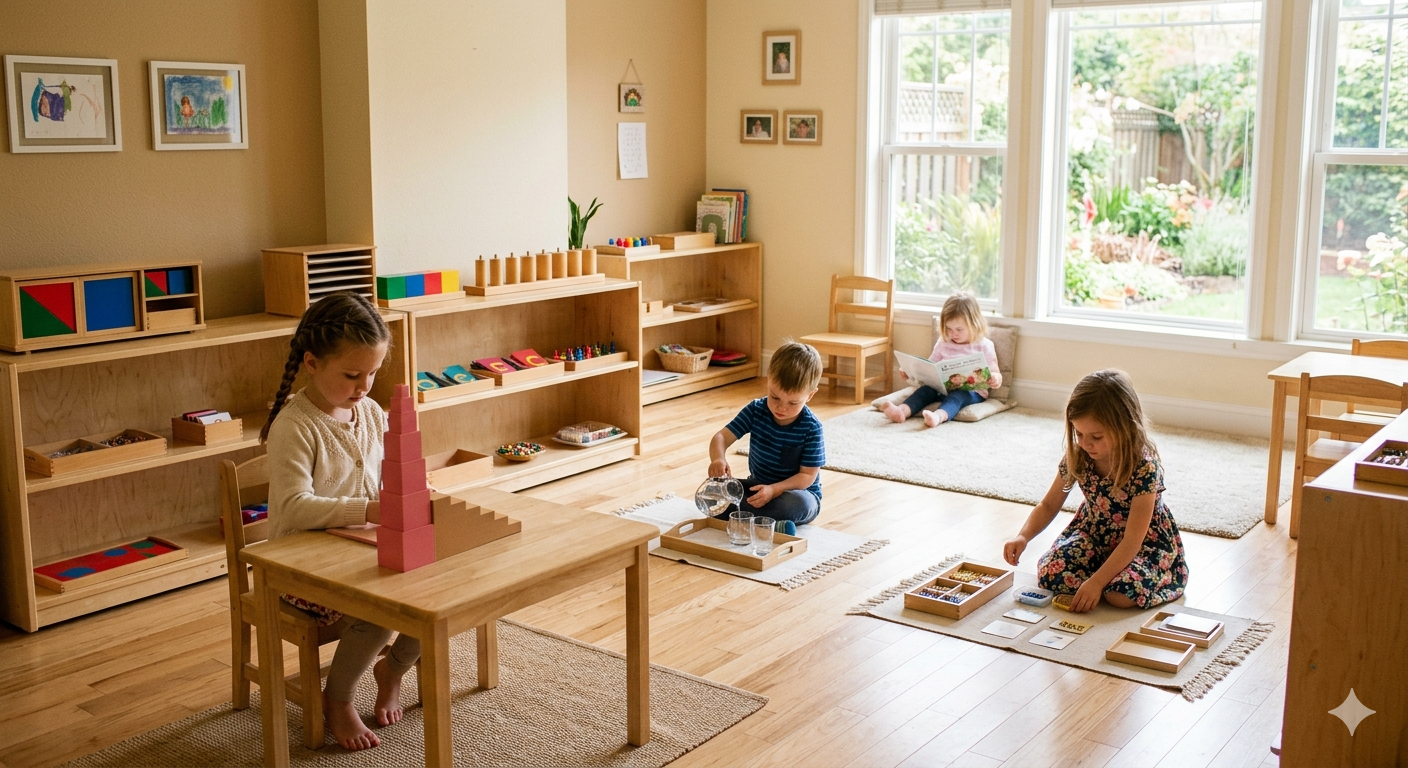
THE PREPARED ENVIRONMENT: HOW TO DESIGN A TRUE MONTESSORI CLASSROOM
We have spent years helping classrooms transform, and the most common breakthrough is always in the environment. Small changes, like shelf height or material placement can dramatically change how children learn.”
Montessori classrooms can look simple at first glance, but every detail is intentional. A well-prepared environment is not about aesthetics alone, it is about supporting children’s natural development, independence, and concentration.
Having worked with both new and established classrooms, We have seen firsthand how thoughtful preparation transforms engagement, reduces conflict, and builds self-confidence in children.
1. Start With Accessibility
A Montessori classroom is designed so children can access everything they need without constant adult help:
- Materials are on low shelves at the child’s height
- Work areas are clearly defined
- Children can move freely between activities
We often encourage teachers to observe children’s flow, if they struggle to reach materials or navigate the room, the environment is working against them.
2. Organize Materials Purposefully
Materials are not just decorative, they guide learning. Each item should:
- Have a clear purpose
- Be self-correcting when possible
- Be limited to avoid overwhelming the child
During our consulting sessions, we often suggest starting with fewer materials and rotating them thoughtfully, rather than overfilling shelves. Less truly can be more in Montessori classrooms.
3. Support Independence in Daily Life
Practical life areas are essential. Children should be able to:
- Pour, sweep, wash, or prepare snacks on their own
- Care for plants or pets independently
- Move safely and confidently around the classroom
Independence is not just a skill, it builds confidence, concentration, and pride in one’s work.
4. Balance Order With Flexibility
A prepared environment is orderly but not rigid:
- Materials are arranged consistently
- Spaces allow for small-group, individual, and sometimes collaborative work
- Children can choose within clear boundaries
In our experience, when the environment balances structure and freedom, children focus longer and are less likely to seek adult intervention.
5. Observe and Adapt
The prepared environment is never “finished.” Observe how children use the space:
- Are materials used as intended?
- Are some items ignored or causing frustration?
- Are transitions smooth or chaotic?
We frequently help teachers tweak arrangements, sometimes moving a shelf or adjusting a work area, which transforms engagement immediately.
A true Montessori classroom is alive. It evolves with the children and supports their growth in every detail, from shelf height to the rhythm of daily activities.
Designing the environment well does not just make teaching easier; it allows children to thrive.
If you would like a fresh perspective on your classroom or want help designing a prepared environment that truly supports children’s independence, We offer guidance for teachers and school leaders. Sometimes a small adjustment can make a big difference, and I would love to help you see what works best for your children and team.