
WHAT IS MONTESSORI EDUCATION? A CLEAR, MODERN EXPLANATION FOR TODAY’S FAMILIES
By The Pine Nest Team, . 10 min read
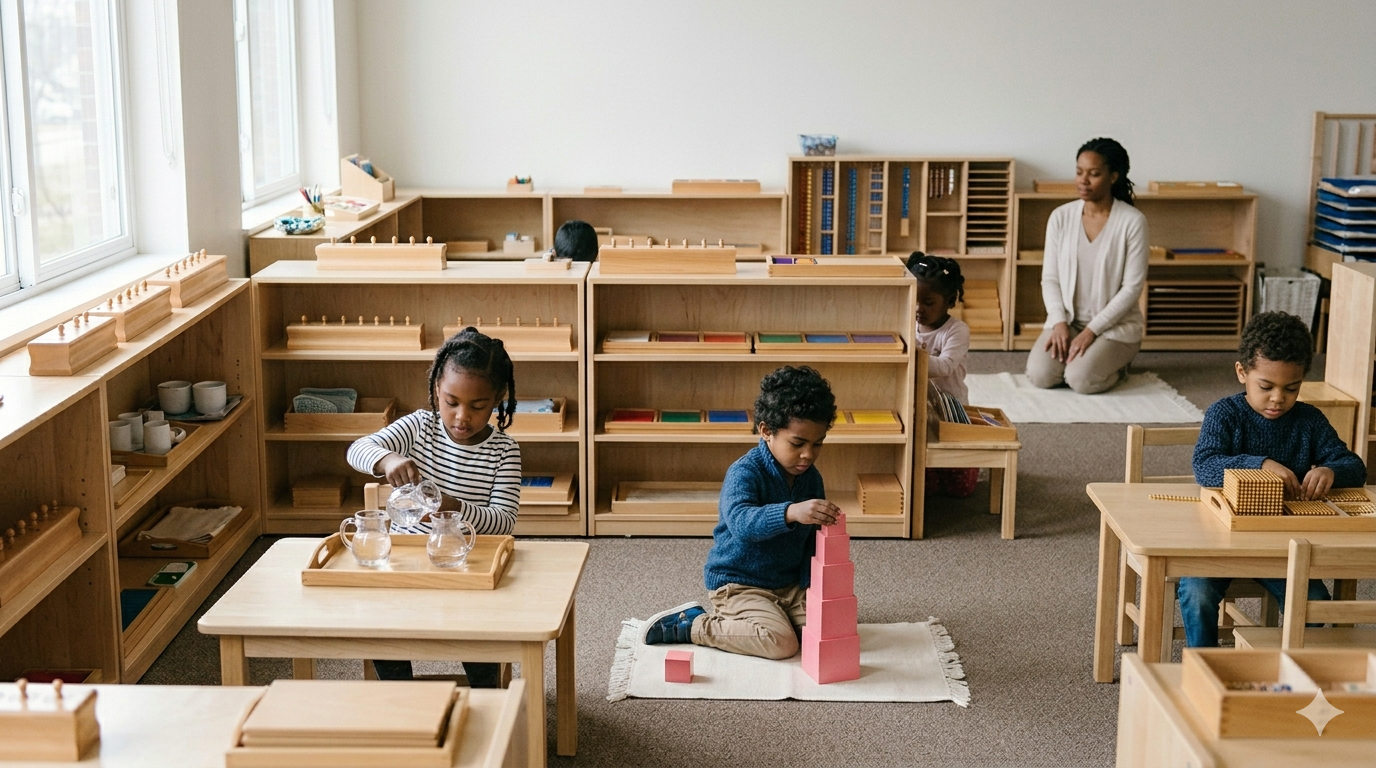
WHAT IS MONTESSORI EDUCATION? A CLEAR, MODERN EXPLANATION FOR TODAY’S FAMILIES
“Watching a three-year-old pour water with complete focus reminded me why Montessori works. It is not just teaching, it is respecting how children naturally learn.”
Montessori education is often talked about but rarely explained clearly. Some imagine quiet rooms filled with wooden toys, while others think it is permissive or rigid. Having worked with schools, teachers, and families for years, I have seen firsthand how Montessori can transform both learning and teaching.
Montessori is not a trend or just a teaching style; it is a philosophy rooted in observation, respect, and development.
Let’s break down what Montessori really is, how it works in practice, and why it continues to matter today.
The Origins of Montessori Education
Montessori education began over a century ago with Dr Maria Montessori, a physician who spent hours observing children. She noticed that children are naturally curious and capable of meaningful work when they are provided a prepared environment and respectful guidance.
In my early consulting work, I remember observing a child so absorbed in pouring water that nothing else in the room distracted her. Moments like these perfectly illustrate Montessori in action, learning through doing, not instruction alone.
Core Principles of Montessori Education
While schools may vary in style, authentic Montessori education is guided by several key principles:
Respect for the Child
Children are treated as capable, intelligent individuals. This respect influences interactions, routines, and even the design of the classroom.
Independence
From pouring their own water to selecting academic work, children are encouraged to do things for themselves. In observing classrooms, I see independence as the single biggest factor in children gaining confidence and focus.
Freedom Within Limits
Children choose their work freely but within clear boundaries. This balance supports self-discipline, responsibility, and emotional regulation.
Prepared Environment
Every classroom object has a purpose. Materials, furniture, and routines are intentionally designed to help children work independently and stay engaged.
Mixed-Age Classrooms
Older children mentor younger ones, while younger children observe and learn. Leadership, empathy, and collaboration develop naturally in these settings.
What Montessori Looks Like in Practice
In a Montessori classroom, learning is purposeful and calm:
- Children select work that interests them
- Work periods are uninterrupted to allow focus
- Movement is intentional and supports learning
- Teachers guide subtly, observing closely and stepping in when necessary
The adult’s role may seem quiet, but it is deeply intentional, guiding each child’s development while respecting their independence.
What Montessori Is Not
Montessori is often misunderstood:
- Not permissive: Clear boundaries and routines are essential.
- Not hands-off: Adults are actively guiding and observing.
- Not just materials: Montessori is about philosophy, relationships, and purposeful work. not just shelves and trays.
Why Montessori Education Still Matters Today
In today’s fast-paced world, children rarely get the time to concentrate deeply or learn through exploration. Montessori classrooms provide exactly that.
We have seen children grow more confident, patient, and willing to take risks, all because their environment and guidance honour how they naturally learn.
Montessori is not about creating “perfect” children or classrooms. It is about respecting development, trusting the learning process, and supporting children in becoming capable, thoughtful, and independent individuals.
If you are curious about how Montessori principles could work in your school, classroom, or home, we offer hands-on guidance to make Montessori practical and sustainable. Helping educators and leaders implement Montessori thoughtfully is what drew me into this work, and it is something I love sharing every day.
Interested in exploring Montessori for your classroom or school? We would be happy to share practical ideas, observe your environment, or brainstorm solutions, no pressure, just a conversation about what works best for your children and team.